Category: Technology

  • Business Insurance Health Releases Benefits ROI Calculator With Cited Outputs From Nine Research Institutions

    Six-step calculator benchmarks 42 employee benefits against data from KFF, SHRM, BLS, Mercer, and other sources to estimate benefits ROI for employers

    Benefits spending is one of the largest employer line items, but many lack a structured way to estimate what it returns. This calculator provides that framework using cited institutional data.”
    — Sam Newland, CFP® — Founder, PEO4YOU

    BOSTON, MA, UNITED STATES, March 19, 2026 /EINPresswire.com/ — Business Insurance Health has released a free Benefits ROI Calculator designed to help small and mid-size employers estimate the financial return on their employee benefits spending using data cited from nine institutional research sources.

    The tool walks users through a six-step process that captures company profile, benefits selections, turnover dynamics, and PEO considerations, then outputs estimated ROI figures with hover-over citations on each data point. Sources include the Kaiser Family Foundation (KFF), the Society for Human Resource Management (SHRM), the Bureau of Labor Statistics (BLS), Mercer, Cigna, and four additional research organizations.

    Industry Context

    Employee benefits costs continue to represent a significant and growing share of total compensation for U.S. employers. According to KFF’s 2024 Employer Health Benefits Survey, annual family health insurance premiums reached approximately $25,572, with employers covering an average of 73 percent. SHRM’s 2024 Employee Benefits Survey found that benefits administration remains among the top operational challenges for small employers, particularly those with fewer than 200 employees. At the same time, a 2024 Mercer survey reported that U.S. employers projected health benefit cost increases of approximately 5.8 percent for the year, adding pressure to already constrained budgets. These trends have increased employer interest in tools that can model benefits-related costs and estimated returns.

    How the Tool Works

    Step one captures the company profile: name, industry (20-plus options), state, and employee count. The tool supports both range-based selection (10-50, 51-100, 101-250, and larger) and exact employee counts.

    Step two is benefits selection. Users select from 42 benefits across eight categories: health and clinical wellness (medical plans, dental, vision, mental health/EAP, telehealth, HSA/FSA accounts, disease management, health coaching), financial and retirement security (401(k) or other retirement plans, life insurance, short-term and long-term disability), insurance protection (workers’ compensation, employment practices liability), work-life flexibility (PTO policies, remote work options, flexible schedules), professional development (tuition reimbursement, certification funding, skills training), voluntary and supplemental benefits (accident insurance, critical illness, identity theft protection, pet insurance), and HR administration services (payroll processing, onboarding support, compliance consulting, employee relations support).

    As users select benefits, the tool displays estimated satisfaction benchmarks: health coverage alone is associated with approximately 40-55 percent employee satisfaction; adding dental and vision may increase that to approximately 50-65 percent; reaching seven core benefits is associated with approximately 60-75 percent; and 30 or more benefits corresponds to approximately 75-90 percent. These ranges are derived from SHRM and Mercer research.

    Turnover and Value Drivers

    Step three asks about turnover dynamics: annual turnover rate, percentage of voluntary turnover, cost of hiring and onboarding a replacement (as a percentage of salary), and the company’s current benefits satisfaction rating. This data feeds the turnover-reduction calculation. Research from SHRM and other sources suggests that improved benefits packages may reduce voluntary turnover, which in turn may lower hiring and onboarding costs. The tool estimates those potential savings.

    Step four covers PEO analysis, asking whether the company is considering or currently using a Professional Employer Organization (PEO), and if so, which aspects of PEO support are relevant (payroll processing, benefits administration, compliance consulting, HR strategy, claims advocacy).

    Scenario Modeling

    Step five outputs the estimated value breakdown with three scenario toggles: Conservative (70 percent of base value), Base Case (100 percent), and Optimistic (130 percent). This range approach acknowledges the inherent uncertainty in modeling benefits returns.

    The output displays estimated benefits competitiveness: the current percentage of a full benefits suite the employer offers, the employer’s stated ideal percentage, and the percentage available through a PEO partnership. For example, a 50-person manufacturer might currently offer approximately 35 percent of a full PEO suite, with an ideal target of 70 percent and 100 percent available through a PEO.

    The output also includes a comparison table showing the employer’s ideal benefits versus the benefits available through a full PEO arrangement, allowing employers to identify gaps between their current aspirations and available options.

    The estimated value metrics include six components: turnover cost savings (estimated dollars saved by reducing voluntary departures), high-value attraction (estimated increase in qualified applicants), time-to-hire reduction, productivity gain (estimated impact from improved benefits coverage and reduced absence), HR time savings (estimated hours per week freed by outsourcing administration), and wellness program impact (estimated reductions in health care utilization). The tool shows estimated gross value, PEO investment cost, net value, and net ROI percentage.

    In a sample scenario, a 50-person manufacturer with $2 million in revenue and 18 percent voluntary turnover might see estimated outputs of approximately $147,000 in gross value, $87,000 in PEO investment, $60,000 in net value, and an estimated ROI of 69 percent under the base case scenario.

    Time-Based Projections

    Step six outputs estimated value comparisons over time, showing monthly, annual, and three-year projections. This helps employers estimate when the return on a benefits expansion may cover the upfront cost. In many modeled scenarios, estimated positive ROI occurs within the first year, driven primarily by reduced turnover and lower hiring costs, though actual results will vary by employer.

    “Benefits spending is one of the largest line items for most employers, but many lack a structured way to estimate what that spending returns,” said Sam Newland, CFP, founder of PEO4YOU and Business Insurance Health. “This calculator gives employers a framework to model those estimates using cited institutional data, so they can evaluate options with more context.”

    ABOUT PEO4YOU / BUSINESS INSURANCE HEALTH

    PEO4YOU, in partnership with Business Insurance Health, is a Boston-based independent benefits consulting firm founded by Sam Newland, CFP. The firm helps small and mid-size employers access enterprise-level benefits, HR support, and cost-reduction strategies through PEOs, self-funded and level-funded health plans, captive insurance, and Taft-Hartley trusts. Its Benefits Intelligence Platform at businessinsurance.health provides employers with actuarial-grade modeling tools. PEO4YOU is part of the Newland Group Insurance family of companies and contributes to a medical debt forgiveness initiative with every client engagement.

    SAMUEL DAVID NEWLAND
    PEO4YOU
    +1 857-255-9394
    email us here
    Visit us on social media:
    LinkedIn
    Instagram
    Facebook
    YouTube
    X

    Legal Disclaimer:

    EIN Presswire provides this news content “as is” without warranty of any kind. We do not accept any responsibility or liability
    for the accuracy, content, images, videos, licenses, completeness, legality, or reliability of the information contained in this
    article. If you have any complaints or copyright issues related to this article, kindly contact the author above.


  • Leading Provider AI.cc Simplifies Enterprise AI Adoption by Consolidating 400 Models into a Single High-Performance API

    SINGAPORE, SINGAPORE, SINGAPORE, March 19, 2026 /EINPresswire.com/ —
    The global artificial intelligence landscape in 2025 and 2026 has reached a fever pitch, characterized by an explosion of generative models and a paradigm shift in how businesses integrate intelligence into their workflows. As the market moves from experimental pilot programs to full-scale enterprise deployment, the complexity of managing multiple AI providers has become a significant bottleneck. Enter AI.cc (AICC), a comprehensive ecosystem that has evolved from a premium domain into a multi-dimensional infrastructure powerhouse. By consolidating over 400 high-performance AI models into a single, unified API, AI.cc is effectively lowering the barrier to entry for the generative AI era.

    The Challenges of the Multi-Model Era

    In the current technological climate, Large Language Models (LLMs) are iterating at a monthly pace. For developers and enterprise architects, this rapid evolution presents a dual-edged sword. While capabilities are increasing, the overhead of managing diverse API keys, varying documentation standards, and disparate billing systems is becoming unsustainable. Furthermore, the risk of “vendor lock-in” looms large; a company heavily invested in a single provider’s ecosystem may find itself at a competitive disadvantage if a superior model is released by a rival firm.

    AI.cc addresses these pain points directly through its “One API” philosophy. By providing a centralized technical hub, AI.cc allows enterprises to remain agile, cost-effective, and technologically resilient in a volatile market.

    Key Takeaways: Why AI.cc is the Standard for Enterprise AI
    Unmatched Model Diversity: Access to over 400 models covering text, image, video, 3D, voice, and OCR.
    Simplified Integration: A single endpoint (https://api.ai.cc) compatible with standard OpenAI formats.
    Cost Optimization: Significant operational savings ranging from 20% to 80% compared to direct-from-vendor pricing.
    Enterprise-Grade Performance: Unlimited TPM/RPM (Tokens/Requests Per Minute) with ultra-low latency for high-frequency agentic workflows.
    Infrastructure Resilience: Elimination of single-provider dependency through a robust, serverless architecture.
    Technical Architecture: The Power of “One API”

    The core of the AI.cc value proposition is its high-performance model aggregation platform. Unlike traditional middleware, AI.cc acts as a sophisticated technical abstraction layer. Developers no longer need to learn the nuances of Google Gemini, Anthropic Claude, or Meta’s Llama series individually. Instead, by simply updating the base URL in their existing code to https://api.ai.cc, they gain instant access to a curated library of the world’s most powerful models.

    Unified Billing and Compliance

    For large organizations, the administrative burden of AI adoption is often overlooked. Procurement departments struggle with managing dozens of individual subscriptions and auditing the usage of various API keys across different departments. AI.cc solves this by centralizing financial management. With a unified billing system and sophisticated permission auditing, enterprises can maintain strict compliance while allowing their developers the freedom to experiment with the latest models from OpenAI, DeepSeek, ByteDance, and more.

    Scalability and Performance

    AI.cc is built on a high-performance serverless architecture designed for horizontal scaling. In the 2025-2026 landscape, the demand for AI is no longer limited to simple chatbots. We are seeing the rise of high-frequency autonomous agents that require massive throughput. AI.cc supports these requirements with virtually unlimited concurrency, ensuring that enterprise-level “Agentic” workflows never hit a performance ceiling.

    Ready to streamline your AI operations?

    Visit www.ai.cc Today
    The 2026 Paradigm Shift: From Chatbots to Autonomous Agents (A2A)

    The AI industry is currently undergoing a fundamental transformation. In late 2025, the focus shifted from “passive chat interfaces” to “active autonomous agents.” These agents do not just answer questions; they negotiate, exchange information, and close business loops independently. This is known as the Agent-to-Agent (A2A) communication network.

    AI.cc is at the forefront of this transition. By integrating next-generation models like GPT-5.2 and Claude 4.5 Opus, which feature enhanced “operational reliability,” AI.cc serves as the essential infrastructure for these agents. The platform acts as a traffic hub where agents can interact across different model backends seamlessly. In this context, AI.cc is no longer just a tool for human assistance—it is the foundational layer for the future’s automated economy.

    Data Excellence: The 7.3T AICC Corpus

    In the generative AI stack, data is the “new oil,” but quality is the refinement process that determines value. AI.cc is not merely a consumer of models; it is a significant contributor to the global AI research community. Through its AICC (AI-ready Common Crawl) initiative, the platform has constructed a massive multi-lingual corpus consisting of 7.3 trillion (7.3T) tokens.

    Scientific Contribution and Model Performance

    Utilizing the advanced MinerU-HTML extraction technology, the AICC corpus has set new benchmarks for data quality. Internal testing and external benchmarks demonstrate that models trained on the AICC corpus achieve an average accuracy of 50.82% across 13 key benchmarks—significantly outperforming datasets like RefinedWeb and FineWeb. This emphasizes the value of “Extraction Quality” in building web-scale datasets. By making tools like MainWebBench and MinerU-HTML public, AI.cc has solidified its position as a scientific leader in AI infrastructure, providing a powerful technical endorsement for its commercial web-scraping and data services.

    The Future of Compute: AICCTOKEN and DePIN

    As the demand for GPU compute continues to outpace supply, the reliance on centralized cloud giants like AWS and Google Cloud presents a strategic risk for AI companies. AI.cc is addressing this through its AICCTOKEN project, which leverages Decentralized Physical Infrastructure Networks (DePIN).

    Democratizing High-Performance Computing

    The AICCTOKEN ecosystem allows for the democratization of GPU power. By creating a decentralized marketplace for compute, AI.cc offers several critical advantages to its users:

    Reduced Costs: Developers can rent compute power on-demand, avoiding the “GPU tax” associated with long-term contracts from centralized providers.
    Censorship Resistance: A decentralized network is inherently more resilient and less susceptible to the restrictions of a single entity.
    High Availability: By pooling global resources, AI.cc ensures that high-performance training and inference remain accessible even during peak global demand.
    Strategic Value: Transforming AI into a Utility

    The true genius of the AI.cc model lies in its ability to transform AI from a “proprietary technology” into a “commodity utility.” In the current market, the specific model used is becoming less of a competitive moat than the efficiency, cost, and stability with which that model is deployed. AI.cc provides the “pipes and electricity” for the AI age.

    For industry practitioners, the choice is clear. Attempting to build and maintain individual integrations for 400 different models is an exercise in diminishing returns. By leveraging AI.cc, firms can focus on what truly matters: building innovative applications and delivering value to their end-users, while leaving the complex infrastructure management to the experts.

    Conclusion: The Definitive Gateway to the AI Future

    As we navigate the explosive growth of the generative AI era in 2025 and 2026, AI.cc stands out as a pivotal player in the ecosystem. It is more than just an API aggregator; it is a comprehensive solution that encompasses high-quality data production, decentralized compute, and a unified technical middle-ground. By simplifying enterprise AI adoption and providing the tools for the next generation of autonomous agents, AI.cc is not just following the market—it is defining it.

    For organizations looking to future-proof their AI strategy, reduce operational expenditures, and gain access to the world’s most advanced linguistic and visual models through a single, high-performance interface, AI.cc is the definitive partner.

    Why Choose AI.cc?

    In a world of 400+ models, AI.cc is the only platform that offers the scale, the science, and the simplicity required for true enterprise transformation. Join the thousands of developers and companies who have already migrated to the “One API” standard.

    Experience the future of AI integration at www.ai.cc.

    AICC
    AICC
    +44 7716940759
    support@ai.cc

    Legal Disclaimer:

    EIN Presswire provides this news content “as is” without warranty of any kind. We do not accept any responsibility or liability
    for the accuracy, content, images, videos, licenses, completeness, legality, or reliability of the information contained in this
    article. If you have any complaints or copyright issues related to this article, kindly contact the author above.

  • Vijilan and LaScala Inc. Announce Go-to-Market Partnership to Deliver Next-Gen SIEM and 24×7 SOC Services for MSSPs

    LaScala Modernizes Its Security Operations Foundation with Vijilan’s ViSH Platform, Powered by CrowdStrike Falcon Next-Gen SIEM and Falcon LogScale

    FORT LAUDERDALE, FL, UNITED STATES, March 19, 2026 /EINPresswire.com/ — Vijilan Security, a premium managed cybersecurity provider delivering enterprise-grade SIEM and SOC services exclusively through the channel, today announced a strategic go-to-market partnership with LaScala Inc., a mature managed security service provider (MSSP) with a strong internal SOC and deep security engineering expertise. The partnership marks a significant milestone in Vijilan’s channel-first growth strategy and demonstrates how established MSSPs can modernize their security operations infrastructure without sacrificing SOC ownership or customer trust.

    Under the partnership, LaScala has adopted Vijilan’s Information Security Hub — ViSH — a multi-tenant SOC-ready platform built on CrowdStrike Falcon Next-Gen SIEM and Falcon LogScale. The arrangement extends LaScala’s SOC coverage to 24×7, with Vijilan providing overnight and weekend monitoring and escalation support while LaScala’s internal team retains full ownership of customer relationships, investigations, and communications during business hours.

    “LaScala didn’t need a new SOC. They needed a modern, scalable foundation. ViSH was built on CrowdStrike Falcon Next-Gen SIEM and Falcon LogScale specifically for MSSPs that already know what they’re doing and want more from their data.”
    — Kevin Nejad, Founder & CEO, Vijilan Security

    A Channel-First Go-to-Market Model Built for Mature MSSPs

    The LaScala partnership is a direct expression of Vijilan’s go-to-market strategy: partnering exclusively with MSPs, MSSPs, and VARs to deliver enterprise-grade security operations at channel scale. Rather than competing with established security providers, Vijilan integrates as a force multiplier — extending coverage, modernizing infrastructure, and enabling partners to offer enterprise-caliber capabilities without expanding headcount.

    Vijilan’s ViSH platform delivers a multi-tenant architecture designed specifically for MSSPs operating at scale. By building on CrowdStrike Falcon Next-Gen SIEM and Falcon LogScale, Vijilan provides partners with high-performance log ingestion, real-time analytics, and advanced threat detection capabilities that legacy SIEM platforms cannot match.

    “As our business grew, we wanted to modernize our SIEM foundation and extend SOC coverage without changing who we are as a security organization. Our goal was to evolve thoughtfully, not reactively.”
    — Ashley Britton, LaScala Inc.

    How the Partnership Works

    The operational model is designed to preserve LaScala’s SOC identity while eliminating the sustainability challenges that come with 24×7 internal coverage. During business hours, LaScala’s internal team leads all investigations, customer communications, and remediation strategy. After hours and on weekends, Vijilan’s global SOC provides continuous monitoring and escalation support.

    From the customer’s perspective, LaScala remains the SOC — consistently and transparently. This model reduces analyst fatigue, supports role specialization, and creates a scalable operational foundation for onboarding additional customers without compromising service quality.

    “Vijilan operates as an extension of our SOC. They handle continuous monitoring after hours, and our team picks up investigations and customer communication during the day. From the customer’s perspective, LaScala is always the SOC.”
    — LaScala Security Operations

    Enterprise Technology That Reinforces Market Trust

    CrowdStrike Falcon Next-Gen SIEM and Falcon LogScale are central to the value Vijilan delivers. Both platforms are purpose-built for modern SOC operations — designed for high-speed search, massive data volumes, and real-time analytics at a scale that legacy log management platforms cannot support. For LaScala’s enterprise customers, the CrowdStrike brand and technology pedigree provide additional validation of the MSSP’s security posture.

    “Moving to a Next-Gen SIEM architecture built on Falcon LogScale gave us the speed, scale, and flexibility we needed. It’s a foundation designed for modern SOC operations, not legacy log management.”
    — LaScala Security Engineering

    An Operating Model Designed for MSSPs Ready to Scale

    The Vijilan–LaScala model is purpose-built for MSSPs that:

    -Already operate a SIEM and want to extract deeper value from their security data
    -Need 24×7 SOC coverage without becoming a round-the-clock staffing organization
    -Want to remain the SOC for their customers — maintaining brand, accountability, and trust
    -Are ready to modernize their infrastructure on a platform built for the next decade of security operations

    Vijilan is actively expanding its channel partner network. MSSPs, MSPs, and VARs interested in the ViSH platform and Vijilan’s go-to-market model are invited to apply for partner status at vijilan.com.

    About Vijilan Security

    Vijilan Security is a premium managed cybersecurity provider delivering SIEM and SOC services purpose-built for MSPs, MSSPs, and VARs. Powered by CrowdStrike Falcon Next-Gen SIEM and Falcon LogScale, Vijilan enables channel partners to deliver enterprise-grade security operations while preserving partner ownership, brand identity, and customer trust. Vijilan operates a global SOC presence and holds SOC 2 Type 2 and ISO 27001 certifications. Learn more at vijilan.com.

    About LaScala Inc.

    LaScala Inc. is a mature managed security service provider with an experienced internal SOC, strong SIEM and log management discipline, and a high-touch approach to customer security. LaScala serves mid-market and enterprise customers across regulated industries, maintaining full accountability for security operations, investigations, and customer relationships.

    Kevin Nejad
    Vijilan Security
    +1 954-334-9988
    email us here
    Visit us on social media:
    LinkedIn
    Instagram
    Facebook
    X
    Other

    Legal Disclaimer:

    EIN Presswire provides this news content “as is” without warranty of any kind. We do not accept any responsibility or liability
    for the accuracy, content, images, videos, licenses, completeness, legality, or reliability of the information contained in this
    article. If you have any complaints or copyright issues related to this article, kindly contact the author above.

  • China Leading QSFP/CFP Optical Transceivers Factory Matrix PT: Breakthroughs at OFC

    SHENZHEN, GUANGDONG, CHINA, March 19, 2026 /EINPresswire.com/ — The air inside the exhibition halls of the Optical Fiber Communication Conference and Exhibition (OFC) is often thick with the energy of rapid technological evolution. As engineers and industry leaders gather around glowing displays of live network traffic, the focus remains fixed on the infrastructure supporting our increasingly connected world.
    It is in this high-precision environment that Matrix PT Tech Co., Ltd. has established its reputation. As a China Leading QSFP/CFP Optical Transceivers Factory, the company plays a vital role in the supply chain for high-speed networking. These QSFP/CFP Optical Transceivers are the workhorses of the modern data center, designed to handle the massive throughput required by today’s internet. The Quad Small Form-factor Pluggable (QSFP) modules offer high-density connectivity in a compact footprint, while the C Form-factor Pluggable (CFP) modules provide the robust performance needed for long-haul transmission and metro core networks, effectively bridging the gap between electrical processing and optical transmission.

    Evolving Infrastructure: Global Connectivity Trends and the Impact of OFC
    The global demand for data is no longer linear; it is exponential. The rise of autonomous systems, real-time AI processing, and the expansion of 5G standalone architectures have pushed traditional networking hardware to its limits. Industry leaders at events like OFC are increasingly focusing on the transition from 100G and 200G toward 400G and 800G ecosystems. For a manufacturer like Matrix PT, participating in these global forums is essential for maintaining alignment with international standards for interoperability and power efficiency.
    As hyperscale data centers seek to reduce their carbon footprint, the trend has shifted toward “green” optics—modules that can deliver higher bandwidth while consuming significantly less power per gigabit. Matrix PT utilizes these industry gatherings to validate its R&D direction, ensuring that its production lines in Shenzhen are optimized for the next generation of pluggable optics. This commitment to staying at the forefront of the industry allows the company to support global service providers as they upgrade their backbones to accommodate the heavy traffic of the AI era.

    Engineering Excellence: Defining the Capabilities of QSFP and CFP Modules
    Matrix PT’s product portfolio is built on a foundation of precision engineering, specifically tailored to the distinct needs of short-reach and long-reach applications. The QSFP series, including the widely deployed QSFP28 and the higher-bandwidth QSFP-DD, is optimized for high-density environments. These modules are critical for switch-to-switch and switch-to-server links, where space and thermal management are at a premium. By utilizing advanced integrated circuits, Matrix PT ensures these modules maintain high signal integrity even in the most crowded rack configurations.

    In contrast, the CFP series—spanning CFP, CFP2, and CFP4 form factors—is designed for the rigors of the telecommunications transport network. These modules are typically used in WDM (Wavelength Division Multiplexing) systems and provide the necessary power to transmit data over tens or even hundreds of kilometers. As a dedicated qsfp/cfp optical transceivers manufacturer, Matrix PT has mastered the balance between the compact requirements of the QSFP and the high-performance demands of the CFP, providing a comprehensive toolkit for network architects.

    Technical Advantage: Innovation in PSM4 and MT High-Speed Interconnects
    A significant factor in the company’s success is its focus on specialized high-speed optical transceivers, particularly those utilizing PSM4 (Parallel Single Mode 4-lane) technology and MT (Mechanical Transfer) ferrule connectors. Unlike standard modules that rely on expensive multiplexing components, PSM4 solutions utilize four parallel lanes of single-mode fiber. This architecture allows for a more cost-effective reach of up to 500 meters or 2 kilometers, making it the ideal choice for large-scale data center leaf-spine architectures.

    The integration of MT high-speed optical transceivers highlights the company’s manufacturing prowess. These products feature high-precision alignment and low-insertion loss, which are critical for maintaining the tight optical budgets of 100G and 400G networks. By focusing on the mechanical stability of the fiber-to-module interface, Matrix PT ensures that its qsfp/cfp optical transceivers provide consistent performance over their entire operational lifespan, even under the stress of continuous high-load data transmission.

    Vertical Integration and Strategic Service Advantages
    Matrix PT’s competitive edge is not just in what it builds, but in how it builds it. Operating from a state-of-the-art facility in Pingshan District, Shenzhen, the company maintains a high-tech enterprise status by controlling the entire lifecycle of its products—from initial R&D to final testing. This vertical integration allows the factory to implement rigorous quality control measures that exceed standard industry requirements. Every qsfp/cfp optical transceivers unit is subjected to comprehensive compatibility testing with major switch brands, ensuring “plug-and-play” reliability for the end user.

    Furthermore, the company’s service model is designed to support the complex procurement needs of the 5G and AI sectors. Matrix PT offers:
    Rapid Prototyping: Accelerating the development cycle for specialized interconnection projects.
    Technical Consultation: Providing expert advice on optical path loss and fiber compatibility to optimize network performance.
    Customized Solutions: Tailoring transceiver specifications to meet unique environmental or distance requirements in medical and military applications.
    Supply Chain Stability: Leveraging its position as a China-based manufacturer to ensure a steady supply of components even during global market fluctuations.

    Pioneering the Future: Diverse Application Scenarios
    The versatility of the qsfp/cfp optical transceivers produced by Matrix PT allows them to serve a wide range of critical industries. In the realm of Cloud Computing and AI, these modules facilitate the high-speed “east-west” traffic between server nodes, which is essential for distributed computing. In the 5G sector, they support the fronthaul and backhaul networks that bring high-speed mobile data to millions of users.

    Beyond traditional networking, the company’s products are making inroads into high-precision fields such as medical imaging, where large data files must be transferred instantly without corruption. The rugged design of certain qsfp/cfp optical transceivers also makes them suitable for the military industry, where equipment must withstand extreme temperatures and mechanical vibrations. By pushing the boundaries of what is possible in optical communication, Matrix PT Tech Co., Ltd. continues to provide the essential components that drive global innovation.

    As the industry looks toward the next decade of connectivity, Matrix PT remains a steadfast partner for enterprises seeking reliable, high-performance optical solutions. Through continuous R&D and a commitment to manufacturing excellence, the company is ensuring that the light of innovation never dims.

    For more information, please visit the official website: www.matrixoptic.com.

    Matrix PT Tech Co., Ltd.
    Matrix PT Tech Co., Ltd.
    +86 13715182450
    lynn.li@matrixoptic.com
    Visit us on social media:
    LinkedIn
    Instagram
    Facebook
    TikTok

    Legal Disclaimer:

    EIN Presswire provides this news content “as is” without warranty of any kind. We do not accept any responsibility or liability
    for the accuracy, content, images, videos, licenses, completeness, legality, or reliability of the information contained in this
    article. If you have any complaints or copyright issues related to this article, kindly contact the author above.

  • China Leading Customized Fiber Array Services by Matrix PT: Strategic Integration at CIOE Summit

    SHENZHEN, GUANGDONG, CHINA, March 19, 2026 /EINPresswire.com/ — In the focused landscape of global telecommunications, the exchange of data has become the invisible pulse of modern civilization. As thousands of industry leaders, engineers, and innovators gather under the bright lights of the China International Optoelectronic Exposition (CIOE), the air is thick with the hum of progress. Among the rows of cutting-edge lasers and high-speed transceivers, a critical component often remains hidden within the hardware, yet it serves as the essential bridge for light: the Fiber Array (FA).

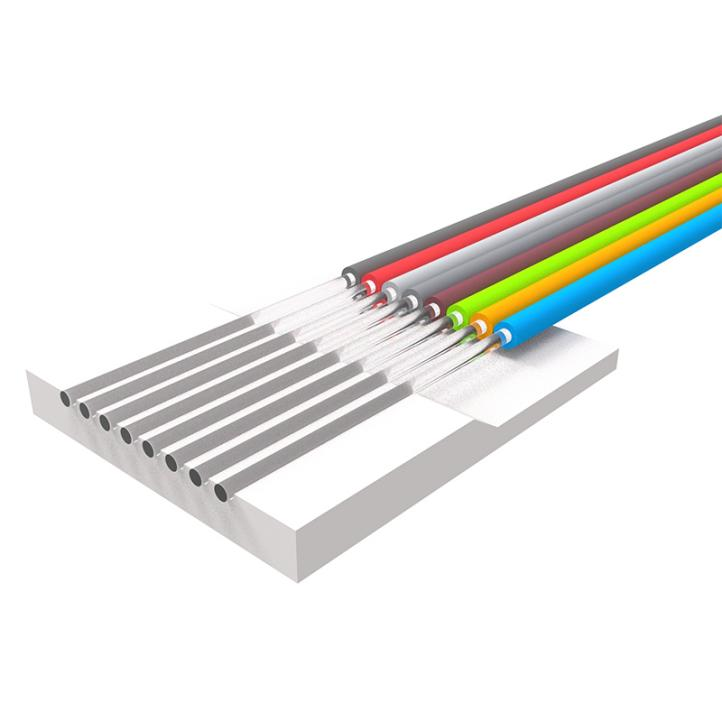
    In this high-stakes environment of connectivity, Matrix PT Tech Co., Ltd. (Matrix PT) has emerged as a pivotal player, offering China Leading Customized Fiber Array Services that address the complex demands of next-generation optical integration. A Customized Fiber Array is not merely a collection of glass strands; it is a high-precision assembly where multiple optical fibers are positioned into a V-groove substrate with sub-micron accuracy. These components are fundamental to data centers, facilitating the seamless transition of light between active chips and passive optical networks, thereby ensuring that the vast torrents of information generated by AI and cloud computing move without bottleneck or loss.

    The Architectural Shift of Optical Interconnects in a Data-Driven Era
    The precision required at the fiber-to-chip interface is currently navigating a transformative period. As hyperscale data centers transition from 400G to 800G and eventually 1.6T architectures, the demand for bandwidth is escalating at an unprecedented rate. This shift is largely driven by the explosion of Artificial Intelligence (AI) and Machine Learning (ML), which require low-latency, high-density interconnects to handle massive parallel processing tasks. In this context, the CIOE serves as a barometer for the industry’s health and direction, showcasing how optical technologies are no longer confined to traditional telecommunications but are now the backbone of medical imaging, military sensing, and industrial automation.

    The significance of such summits lies in their ability to foster collaboration between component manufacturers and system integrators. As the industry moves toward Co-Packaged Optics (CPO) and silicon photonics, the physical layer—where the fiber meets the chip—becomes the ultimate frontier of efficiency. The trend is clear: components must become smaller, more heat-resistant, and capable of higher fiber counts. This places a significant premium on customized fiber array services, as standard off-the-shelf solutions often fail to meet the unique spatial and thermal requirements of emerging high-density hardware. By participating in these global dialogues, enterprises contribute to a standardized yet flexible ecosystem that supports the global rollout of 5G and the maturation of “all-optical” networking.

    Precision Engineering and the Advantages of Customized Fiber Array Solutions
    At the heart of Matrix PT’s contribution to the industry is a deep-seated expertise in the manipulation of light at a microscopic scale. The company’s customized fiber array offerings are defined by a commitment to ultra-high precision and environmental stability. Understanding that every optical system has distinct parameters, the manufacturing process emphasizes several core technological advantages:

    Sub-Micron Pitch Accuracy: The ability to maintain precise spacing between fiber cores is critical. Matrix PT utilizes advanced V-groove substrates and high-resolution alignment systems to ensure that customized fiber array units achieve minimal insertion loss and high coupling efficiency, which is vital for long-distance data transmission.
    Specialized Fiber Integration: Beyond standard single-mode fibers, the company excels in the production of high-precision polarization-maintaining (PM) fiber arrays. These are essential for applications where the orientation of light waves must be strictly controlled, such as in coherent communication or high-sensitivity optical sensors.
    Small-Form-Factor and High-Density Designs: To meet the spatial constraints of modern transceivers, Matrix PT provides customized fiber array services that include low-profile, “thinned” glass substrates and high-density MT-FA configurations. These designs allow for a higher number of channels within a smaller footprint, directly supporting the miniaturization trends in AI hardware.
    Reliability Under Extreme Conditions: Utilizing aerospace-grade adhesives and rigorous thermal cycling tests, these products are designed to withstand the harsh environments of 5G base stations and military-grade equipment, ensuring a service life that matches the longevity of the core infrastructure.

    A Holistic Product Portfolio for Modern Applications
    The technological prowess of Matrix PT extends beyond a single component to a comprehensive product line designed for the entire optical interconnect spectrum. This vertical integration allows the company to provide end-to-end support for data centers and telecommunication hubs. The product range includes not only customized fiber array units but also MT-RJ jumpers, MPO/MTP high-density cabling, and specialized PLC splitters. This holistic approach ensures that from the backbone of the network to the individual server rack, the optical path remains optimized.

    In the realm of data centers, these products find their most rigorous application. As internal traffic—often referred to as East-West traffic—increases due to cloud computing and distributed databases, the need for reliable high-quality customized fiber array factory outputs becomes paramount. These components are used in optical modules that connect leaf-and-spine switches, where any signal degradation can lead to significant data latency. Furthermore, the expansion into 5G communication and medical care illustrates the versatility of these fiber arrays. In medical diagnostics, for instance, high-precision fiber arrays are used in Optical Coherence Tomography (OCT) devices, requiring the same level of customized fiber array services that the telecommunications sector demands.

    By maintaining a headquarters in Shenzhen, a global hub for electronics and innovation, Matrix PT leverages a robust supply chain and a talent pool dedicated to R&D. This strategic location enables the company to refine its customized fiber array techniques in real-time, responding to the feedback of global partners and the shifting requirements of the AI-driven market. As the industry continues to look toward the future, the integration of high-performance optical components will remain the cornerstone of global connectivity, driving the next wave of digital transformation.

    For more information, visit: www.matrixoptic.com.

    Matrix PT Tech Co., Ltd.
    Matrix PT Tech Co., Ltd.
    +86 13715182450
    lynn.li@matrixoptic.com
    Visit us on social media:
    LinkedIn
    Instagram
    Facebook
    TikTok

    Legal Disclaimer:

    EIN Presswire provides this news content “as is” without warranty of any kind. We do not accept any responsibility or liability
    for the accuracy, content, images, videos, licenses, completeness, legality, or reliability of the information contained in this
    article. If you have any complaints or copyright issues related to this article, kindly contact the author above.

  • The Evolution of China Leading Multi-Channel Transceiver Manufacturer Matrix PT in the AI Era

    SHENZHEN, GUANGDONG, CHINA, March 19, 2026 /EINPresswire.com/ — Have you ever wondered how a simple voice command to your smartphone can instantly retrieve information from a server thousands of miles away? What allows a self-driving vehicle to process massive amounts of environmental data in milliseconds to ensure passenger safety? Or how surgeons can now perform complex operations remotely with zero perceptible lag? Behind these modern miracles lies a sophisticated infrastructure of light and glass, where data travels at incredible speeds through optical fibers. At the heart of this network, transforming electrical signals into light and back again, is the multi-channel transceiver—a small but mighty component that has become the literal heartbeat of the digital age.

    As a China Leading Multi-Channel Transceiver Manufacturer, Matrix PT Tech Co., Ltd. (Matrix PT) operates at the intersection of these technological breakthroughs. To understand the significance of a multi-channel transceiver, one must look at how it differs from traditional single-lane hardware. While a standard transceiver might handle data on a single wavelength or path, multi-channel versions utilize multiple lanes—often four or eight—to transmit data simultaneously. This is achieved through advanced technologies like Parallel Single Mode (PSM) or Coarse Wavelength Division Multiplexing (CWDM). By bundling these channels, manufacturers can achieve staggering speeds of 100G, 400G, and even 800G, providing the high-bandwidth “superhighways” required for modern data centers and Fiber-to-the-Home (FTTH) networks.

    The AI Revolution: Redefining Global Connectivity
    The rise of Artificial Intelligence is perhaps the most significant shift in the technological landscape since the invention of the internet. AI is no longer a futuristic concept confined to research labs; it is actively reshaping industries from finance to healthcare. In the professional world, AI algorithms are optimizing supply chains and predicting market trends with uncanny accuracy. In our daily lives, AI powers everything from personalized streaming recommendations to smart home energy management. However, this intelligence is hungry for data. The Large Language Models (LLMs) that drive modern AI require massive computational power, which in turn demands a level of data throughput that traditional networking hardware simply cannot sustain.

    In China, the development of AI has moved at an unprecedented pace. The national focus on digital transformation has led to the construction of massive “intelligent computing centers.” These facilities are different from traditional data centers; they require ultra-low latency and massive density. This is where the evolution of the multi-channel transceiver becomes critical. As the industry shifts toward AI-driven architectures, the demand for reliable, high-speed optical interconnections has surged. The industry is moving away from basic connectivity toward “intelligent connectivity,” where the efficiency of the optical link directly impacts the performance of the AI model.

    Precision Engineering in Multi-Channel Transceiver Technology
    Matrix PT, headquartered in the innovation hub of Shenzhen, has spent years refining the core components that make high-speed communication possible. Their product portfolio is a testament to the complexity of modern optical engineering. For instance, in the realm of high-speed data centers, the company’s PSM4 and MT-based high-speed optical transceivers are designed to meet the rigorous demands of 40G and 100G environments. These products utilize high-density MT ferrules and multi-fiber technology, allowing for a compact form factor that does not sacrifice performance.

    The technical superiority of a multi-channel transceiver often lies in its internal alignment and assembly. Matrix PT specializes in customized Arrayed Waveguide Grating (AWG) assemblies, as well as Mux/Demux and Fiber Array (FA) components. These are the critical “traffic controllers” within a 100G transceiver. By utilizing high-precision AWG technology, the manufacturer can split or combine different wavelengths of light with minimal loss, ensuring that signal integrity is maintained over long distances. This level of precision is vital for the stability of 5G communications and the high-performance computing (HPC) environments used in AI training.

    Core Service Advantages and Technical Innovation
    Beyond the hardware itself, the competitive edge of this multi-channel transceiver manufacturer lies in its holistic approach to the R&D process. Matrix PT has established a high-tech enterprise model that integrates the entire lifecycle of optical components—from initial design to large-scale production and global sales. This vertical integration allows for a level of customization that is rare in the industry. Whether it is Multimode (MM) FA-MT solutions for short-range data center links or specialized components for FTTH deployments, the company tailors its output to the specific spatial and thermal constraints of the client’s infrastructure.

    Furthermore, the company’s commitment to quality control addresses a major pain point in the optical industry: reliability. In a 5G network or a military-grade communication system, a single component failure can lead to catastrophic downtime. Matrix PT utilizes rigorous testing protocols for its multi-channel transceiver products, ensuring that they can withstand the environmental stresses of both urban data centers and remote telecommunications towers. This reliability, combined with a deep understanding of optical interconnection solutions, has positioned the firm as a trusted partner for cloud computing providers and medical technology firms alike.

    A Legacy of Growth and a Vision for the Future
    The history of Matrix PT is one of steady, focused growth. Starting with a dedication to the fundamental core components of optical communication, the company has expanded its reach into diverse fields including medical care and the military industry. This diversification has been driven by a philosophy of continuous improvement. By staying ahead of the curve in terms of industry standards—such as the transition from 100G to 400G and 800G—the company has remained a relevant force in the competitive Shenzhen tech ecosystem.

    Looking forward, the roadmap for Matrix PT involves even deeper integration with the AI and 5G sectors. As the world moves toward the “6G” era and even more complex AI applications, the need for a multi-channel transceiver that is even more energy-efficient and compact will grow. The company is currently investing in the next generation of optical engines and integrated photonics to meet these future challenges. The goal is not just to manufacture parts, but to provide the foundational technology that enables the next decade of human innovation.

    Bridging the Gap Between Light and Intelligence
    The evolution of optical technology is, in many ways, the story of modern progress. As we continue to blur the lines between the physical and digital worlds, the role of the multi-channel transceiver manufacturer becomes increasingly vital. It is the bridge between the raw potential of light and the practical reality of artificial intelligence. By providing the high-performance optical interconnection solutions that power our most ambitious projects, Matrix PT is not just watching the future unfold—they are actively building the infrastructure that makes it possible.

    To learn more about high-performance optical solutions, visit: www.matrixoptic.com.

    Matrix PT Tech Co., Ltd.
    Matrix PT Tech Co., Ltd.
    +86 13715182450
    lynn.li@matrixoptic.com
    Visit us on social media:
    LinkedIn
    Instagram
    Facebook
    TikTok

    Legal Disclaimer:

    EIN Presswire provides this news content “as is” without warranty of any kind. We do not accept any responsibility or liability
    for the accuracy, content, images, videos, licenses, completeness, legality, or reliability of the information contained in this
    article. If you have any complaints or copyright issues related to this article, kindly contact the author above.

  • Professional CPO Co-packaged optics Technology Solutions In China: Future of High-Speed Interconnects

    SHENZHEN, GUANGDONG, CHINA, March 19, 2026 /EINPresswire.com/ — The rapid evolution of generative artificial intelligence and the expansion of hyperscale data centers have pushed traditional networking architectures to their physical limits. As data transmission speeds transition from 800G toward 1.6T and beyond, the industry is witnessing a pivotal architectural shift.

    Matrix PT Tech Co., Ltd. (Matrix PT), headquartered in the innovation hub of Shenzhen, is at the forefront of this transformation, providing Professional CPO Co-packaged optics Technology Solutions In China. By integrating optical engines and switching silicon into a single packaged entity, CPO Co-packaged optics technology addresses the critical bottlenecks of power consumption and signal integrity that plague conventional pluggable optics. This technology represents a fundamental departure from the discrete component model, moving the optical interface closer to the processor to drastically reduce the electrical trace length and minimize energy loss.

    The Strategic Shift in Global and Domestic Interconnect Landscapes
    The global demand for high-bandwidth, low-latency communication is no longer just a requirement for telecommunications; it is the backbone of the modern digital economy. The international market is currently grappling with the “power wall,” where the energy required to move data across copper traces begins to rival the energy used for computation itself. In this context, CPO Co-packaged optics technology has emerged as the consensus solution for next-generation green data centers. Market analysts predict a significant compound annual growth rate for co-packaged solutions as hyperscalers look to optimize their total cost of ownership while meeting stringent ESG (Environmental, Social, and Governance) targets.

    China occupies a unique and advantageous position in this global transition. With the world’s most extensive 5G infrastructure and a rapidly growing domestic AI chip industry, the Chinese market serves as both a massive consumer and a vital laboratory for high-speed interconnects. The “East-to-West Computing” national project has further accelerated the need for efficient data transmission across vast distances. CPO Co-packaged optics technology solutions in China benefit from a highly integrated supply chain, ranging from advanced ceramic packaging and precision optical components to sophisticated testing and assembly capabilities. This ecosystem allows for faster iterative development and cost-competitive manufacturing, positioning regional leaders like Matrix PT to support both domestic growth and international demand for high-performance optical communication core components.

    From Pluggable to Co-Packaged Solutions
    To understand the impact of CPO Co-packaged optics technology, one must evaluate the limitations of current systems. Standard pluggable transceivers, while versatile, introduce significant parasitic capacitance and inductance at higher frequencies. As speeds double, the thermal management of these modules becomes increasingly complex. CPO Co-packaged optics technology solutions resolve these issues by shortening the distance between the electrical switch chip and the optical conversion engine. This proximity allows for the use of lower-power electrical interfaces, effectively reducing the overall power consumption of the switch system by up to 30% compared to traditional front-panel pluggable architectures.

    Furthermore, the integration inherent in CPO Co-packaged optics technology enables a higher density of I/O ports. In a standard 1U rack unit, the physical space required for pluggable modules limits the total throughput. By moving the optics inside the package, engineers can achieve much higher radix switches, which simplifies data center leaf-spine topologies and reduces the number of required cables and intermediate switches. This leads to a more streamlined, reliable, and scalable infrastructure.

    Matrix PT: Precision Engineering and Core Component Excellence
    Matrix PT has established itself as a high-tech enterprise dedicated to the R&D and production of core components that make these advanced solutions possible. The company’s expertise spans across various domains, including 5G communication, cloud computing, and high-reliability fields such as medical care and the military industry. By focusing on the underlying material science and precision manufacturing of optical components, the company provides the building blocks for robust CPO Co-packaged optics technology solutions.

    The technical superiority of Matrix PT’s offerings lies in their stability and high-performance metrics under rigorous conditions. For instance, in data center environments where thermal fluctuations can affect laser performance, the company’s high-precision components ensure consistent signal quality. This focus on “core components” is vital because CPO Co-packaged optics technology requires a level of component reliability far exceeding that of replaceable pluggable modules. Once co-packaged, the optics are no longer easily swappable, making the initial quality of the optical engine and its sub-components paramount to the system’s lifespan.

    Diverse Applications and Industry Impact
    While the data center is the primary driver for high-speed interconnects, the influence of CPO Co-packaged optics technology solutions extends far beyond the server rack. In the realm of Artificial Intelligence, the massive clusters required for training Large Language Models (LLMs) depend on massive “East-West” traffic—data moving between GPUs. Here, low latency is critical to prevent synchronization bottlenecks. Matrix PT’s focus on high-performance optical interconnection supports these AI fabrics, enabling seamless data flow that scales with the increasing complexity of neural networks.

    In the 5G and future 6G sectors, the transition to higher frequency bands necessitates more efficient fronthaul and backhaul solutions. The integration offered by CPO Co-packaged optics technology allows for more compact base station designs and improved energy efficiency at the edge. Additionally, for specialized fields like medical imaging and military communications, the enhanced signal integrity and reduced electromagnetic interference (EMI) provided by co-packaged solutions offer clear safety and performance advantages over traditional copper-heavy systems.

    Future Roadmaps and Commitment to Innovation
    Looking ahead, the industry is moving toward the standardization of CPO interfaces. Matrix PT is actively aligning its product planning with these global standards to ensure interoperability and ease of adoption. The company’s roadmap involves deepening the integration of silicon photonics with advanced packaging techniques, further reducing the footprint of optical engines. As the industry moves toward 3.2T switching capacities, the role of CPO Co-packaged optics technology will transition from an innovative alternative to the industry standard.

    The company remains committed to providing the global market with reliable, high-efficiency optical interconnection solutions. By investing heavily in R&D and maintaining a rigorous quality control system in its Shenzhen headquarters, Matrix PT aims to drive the next wave of high-speed communication. The focus remains on solving the “thermal challenge” and “power challenge” through better component design, ensuring that as the world’s data needs grow, the infrastructure supporting it remains sustainable and robust.
    As a specialist in optical communication, Matrix PT Tech Co., Ltd. continues to bridge the gap between current networking limitations and the future of high-speed data exchange. Through the development and refinement of CPO Co-packaged optics technology solutions, the enterprise is not only enhancing its own competitive edge but also contributing to the technological advancement of the global interconnect industry.

    For more information on high-performance optical interconnection components and solutions, visit: www.matrixoptic.com.

    Matrix PT Tech Co., Ltd.
    Matrix PT Tech Co., Ltd.
    13715182450
    lynn.li@matrixoptic.com
    Visit us on social media:
    LinkedIn
    Instagram
    Facebook
    TikTok

    Legal Disclaimer:

    EIN Presswire provides this news content “as is” without warranty of any kind. We do not accept any responsibility or liability
    for the accuracy, content, images, videos, licenses, completeness, legality, or reliability of the information contained in this
    article. If you have any complaints or copyright issues related to this article, kindly contact the author above.

  • Matrix PT Showcasing China Leading Customized Fiber Array Services

    SHENZHEN, GUANGDONG, CHINA, March 19, 2026 /EINPresswire.com/ — At a bustling metropolitan hospital, a surgeon performs a delicate neurosurgical procedure using a robotic arm, guided by real-time, high-definition 3D imaging streamed from a specialist located hundreds of miles away. Every millisecond of latency or a single dropped packet of data could compromise the precision of the incision. This seamless flow of life-critical information is made possible not just by software, but by the physical backbone of the network—the microscopic alignment of glass fibers within optical modules.
    As our society moves toward this era of instantaneous connectivity, Matrix PT Tech Co., Ltd. (Matrix PT) stands at the forefront, providing China Leading Customized Fiber Array Services. By delivering a expert customized fiber array service, the company ensures that the Fiber Array Units (FAUs) inside these modules can handle the massive data throughput required for 5G tele-medicine, AI diagnostics, and the complex infrastructure of modern cloud computing.

    The Global Shift Toward High-Density Optical Interconnects
    The architecture of the global internet is currently undergoing its most significant structural shift in decades. As the world transitions from 400G to 800G and prepares for the 1.6T era, the bottleneck has shifted from data processing to data transmission. Inside the massive data centers of Silicon Valley and Shenzhen, “Spine-and-Leaf” architectures now require thousands of high-density fiber connections to operate simultaneously. In this environment, the efficiency of optical coupling—the physical act of aligning light from a laser into a fiber—becomes the ultimate arbiter of system performance.

    In response to this demand, the role of Chinese manufacturers has transformed. No longer limited to mass assembly, leading Chinese suppliers are now the primary innovators in precision material science. This evolution is driven by a commitment to the “EEAT” (Experience, Expertise, Authoritativeness, and Trustworthiness) principles of manufacturing, where sub-micron precision is standard. These suppliers are now critical contributors to the global 5G rollout and the scaling of AI-driven neural networks, ensuring that high-performance hardware remains accessible to the global market while pushing the boundaries of what is technically possible.

    The Backbone of Customized Fiber Array Services
    At the heart of a high-speed optical network is the Fiber Array (FA). While it appears to be a simple component, it requires extraordinary technical finesse to manufacture. A customized fiber array factory like Matrix PT must align multiple fibers into high-precision V-grooves with tolerances that are measured in nanometers. The need for a customized fiber array service arises because modern applications are no longer “one size fits all.” Different optical modules require specific channel counts, such as 8CH, 16CH, or 32CH, and varying fiber pitches like 250μm or 500μm to fit within miniaturized housings.

    The technical demands are particularly high for specialized components:
    Polarization Maintaining (PM) Fiber Arrays: In coherent communication systems, the alignment of the fiber’s stress rod relative to the V-groove must be accurate to within ±1°. Even a minor deviation can lead to signal degradation.
    Environmental Reliability: These components must maintain their integrity in extreme conditions, with an operating temperature range of -40°C to 85°C. This is vital for 5G base stations located in harsh outdoor environments.
    Material Science: Utilizing quartz or Pyrex glass for substrates allows the component to match the thermal expansion coefficients of the chips they are bonded to, preventing mechanical failure over time.

    Matrix PT: Integrating Innovation with Tailored Solutions
    Based in Shenzhen, Matrix PT has established itself as a strategic partner for the world’s leading telecommunications and AI firms. The company’s core advantage lies in its end-to-end customized fiber array service, which focuses on solving the specific “pain points” of high-speed network integration. This includes the mechanical customization of lid designs and the optimization of insertion loss—crucial for maintaining signal strength over long-reach 5G links.

    As a dedicated customized fiber array factory, Matrix PT offers a diverse product portfolio:
    FA-MT Receptacles: These are designed for multi-fiber arrays in compact optical modules, effectively reducing cabling clutter by up to 70% in high-density data centers.
    Customizable MPO Solutions: By integrating MPO connectors with tailored fiber arrays, Matrix PT provides a bridge between external cabling and internal chip-level components, supporting the scalability of AI data centers.

    Fiber Array Units (FAUs): Designed specifically for 800G and 1.6T modules, these units are essential for the next generation of cloud computing infrastructure.
    The company’s ability to “fine-tune” optical parameters—such as pitch accuracy and core offset—ensures that their products integrate seamlessly into complex customer systems, whether they are used in medical imaging, military-grade communication, or FTTH (Fiber to the Home) expansion.

    The Strategic Advantage of the China-Based Supply Chain
    Partnering with a China-based customized fiber array factory provides unique strategic benefits. The proximity to the world’s largest 5G and semiconductor markets allows for a rapid R&D feedback loop. When a client requires a new fiber pitch for a prototype 1.6T module, Matrix PT can iterate, manufacture, and test the component in a fraction of the time required by traditional suppliers.

    Furthermore, the status of Matrix PT as a “High-Tech Enterprise” reflects a broader national commitment to quality and innovation. By adhering to international quality standards while maintaining the agility of a specialized provider, they offer a customized fiber array service that is both scalable and highly precise. This balance of technical depth and manufacturing scale is what allows Matrix PT to support the global expansion of high-speed digital infrastructure.

    Future Horizons: Toward 1.6T and Co-Packaged Optics
    As we look toward the future, the industry is moving toward Co-Packaged Optics (CPO), where the optical connection is brought directly to the processor. This will require even smaller footprints and higher fiber densities, making the role of a high-quality customized fiber array service even more critical. Matrix PT is already investing in the next generation of V-groove technology and automated alignment systems to meet these demands.

    In conclusion, the evolution of our digital world—from robotic surgery to AI-driven cities—depends on the reliability of the physical connection. By focusing on precision, customization, and reliability, Matrix PT is not only showcasing the strength of a modern customized fiber array factory but is also ensuring that the global communication network remains robust enough to power the innovations of tomorrow.

    For more information on high-performance optical solutions, visit: www.matrixoptic.com.

    Matrix PT Tech Co., Ltd.
    Matrix PT Tech Co., Ltd.
    +86 13715182450
    lynn.li@matrixoptic.com
    Visit us on social media:
    LinkedIn
    Instagram
    Facebook
    TikTok

    Legal Disclaimer:

    EIN Presswire provides this news content “as is” without warranty of any kind. We do not accept any responsibility or liability
    for the accuracy, content, images, videos, licenses, completeness, legality, or reliability of the information contained in this
    article. If you have any complaints or copyright issues related to this article, kindly contact the author above.
  • Peritas AI and AdventHealth Partner to Explore AI and Humanoid Robotics in Support of Surgical Care

    WEST PALM BEACH, FL, UNITED STATES, March 19, 2026 /EINPresswire.com/ — Peritas AI Inc. and AdventHealth are partnering to explore how advanced artificial intelligence and emerging humanoid robotics can strengthen surgical operations and improve the experience for patients and care teams. The effort focuses on enhancing coordination and reliability across perioperative services to support more seamless care before, during and after surgery.

    While surgical technology inside the operating room has advanced rapidly, many of the processes that support each procedure, from sterile preparation to equipment readiness, still rely on complex, manual coordination. Through this partnership, Peritas AI and AdventHealth are evaluating how intelligent systems including assistive humanoid robotics designed to assist in clinical settings may help support real-time coordination across surgical services.

    The goal is to support care teams as they work, helping clinicians remain focused on delivering safe, high-quality care to each patient.

    “Behind every surgical procedure is a person placing their trust in us,” said Doug Harcombe, CEO of AdventHealth’s Central Florida Division South Market. “Our responsibility is not only to provide excellent clinical care, but also to create an environment where patients and families feel supported and at peace. We approach every innovation with a deep sense of responsibility. This early phase allows us to evaluate how robotics might support our teams, patients and families while strengthening our ability to deliver whole-person healing.”

    “Surgical care is built on precision, timing and teamwork. Throughout my career in healthcare robotics, I’ve seen how technology can expand what’s possible to make care more safe and effective,” added Dr. Vipul Patel, medical director of the AdventHealth Global Robotics Institute. “This next step is about exploring how intelligent systems and assistive robotics can support the entire surgical team, improving coordination behind the scenes so surgeons, nurses and staff can stay fully focused on the patient. Technology can enhance human skill and judgment, not replace it.”

    Cortney Knoll, Peritas AI president and CEO said, “Healthcare teams are working in environments that were not built for the complexity and pace of modern surgical care. Too often, extraordinary clinicians spend valuable time navigating layers of coordination that pull them away from the moments that matter most. We believe intelligence should be thoughtfully integrated into the care environment — anticipating needs, aligning resources and easing pressure in real time. We’re honored to work alongside AdventHealth as they continue their mission to extend Christ’s healing ministry, and we’re inspired to help build technology that strengthens that calling by supporting the people who care for others every day.”

    This partnership reflects a shared commitment to thoughtful innovation using artificial intelligence and assistive robotics to strengthen human connection, enhance safety and support whole-person healing in surgical care. “Embodied intelligence has the potential to transform perioperative operations,” said Dr. Martin Roche, Founder and Executive Chairman of Peritas AI and orthopedic surgeon. “By combining assistive robotics with real-time AI orchestration, we can create surgical environments that sense, adapt, and support clinicians seamlessly — allowing human judgment and compassion to remain at the center.”

    Peritas AI is utilizing NVIDIA Physical AI infrastructure to expedite the development, simulation, and deployment of intelligent robotic systems within hospital settings. The NVIDIA Isaac for Healthcare framework create simulated environments, allowing for the rapid development and validation of robotic control policies before their use in clinical settings. The platform, which features advanced multimodal reasoning capabilities and is powered by NVIDIA open models, enables assistive humanoid robots to safely perceive, reason, and act in complex perioperative environments. This technology supports agent-based surgical workflows while meeting the essential reliability, scalability, and real-time performance demands.

    Cortney Knoll
    Peritas AI
    +1 954-998-6002
    cortney@peritas.ai
    Visit us on social media:
    LinkedIn

    Legal Disclaimer:

    EIN Presswire provides this news content “as is” without warranty of any kind. We do not accept any responsibility or liability
    for the accuracy, content, images, videos, licenses, completeness, legality, or reliability of the information contained in this
    article. If you have any complaints or copyright issues related to this article, kindly contact the author above.

  • AktieGo Publishes Editorial Feature Examining Decentralized Power Infrastructure and Hydrogen Energy Deployment

    The article explores developments in decentralized power systems and hydrogen energy infrastructure, highlighting key players and broader industry trends shaping the future of distributed electricity generation.

    VANCOUVER, British Columbia, Mar. 18, 2026 / PRZen / AktieGo, a financial media and investor awareness platform, has published a new editorial feature examining developments in decentralized power infrastructure and hydrogen-enabled energy systems. The article explores how rising global electricity demand, particularly from artificial intelligence data centers and high-performance computing, is reshaping how power generation is deployed.

    The editorial examines growing electricity demand, the limitations of traditional grid expansion, and how modular energy systems are emerging as an alternative for customers requiring reliable power independent of centralized utilities.

    Read the full article here:
    https://aktiego.com/feature-article/decentralized-power-hydrogen-electrifying-infrastructure-beyond-the-grid/

    Decentralized Power and the Growing Demand for Electricity

    Global electricity demand is rising rapidly as energy-intensive technologies such as artificial intelligence, high-performance computing, and large-scale data centers expand worldwide. Research cited in the article notes that data center electricity demand could more than double by 2030 as new computing infrastructure comes online.

    About AktieGo

    AktieGo is a financial media and investor awareness platform owned by Bai Media Group Ltd. that publishes articles, commentary, and market coverage focused on publicly traded companies and emerging sectors including mining, natural resources, and technology.

    More information about AktieGo:
    https://aktiego.com

    Media Contact

    Bai Media Group Ltd. (AktieGo.com)
    Email: editorial@aktiego.com
    Website: https://aktiego.com

    Disclosure and Disclaimer

    Nothing in this publication should be considered financial or investment advice. Bai Media Group Ltd. (AktieGo.com) is not licensed under securities laws to provide investment advice. Readers should consult a licensed financial advisor before making any investment decision.

    This publication is not an offer or recommendation to buy or sell any security.

    Third parties may hold shares of companies mentioned and may sell those shares at any time, which could affect the stock price. Bai Media Group Ltd. (AktieGo.com) is not being paid and does not currently own shares of these companies but reserves the right to buy or sell shares at any time without notice.

    Information in this publication is believed to be reliable but is not guaranteed to be accurate or complete. Investing in securities involves significant risk and readers may lose part or all of their investment.

    Press Release Distributed by PRLog

    Source: Bai Media Group Ltd. (AktieGo.com)

    Follow the full story here: https://przen.com/pr/33608064